Knowledge & Heritage
The Smoking Jacket
The ultimate expression of refined evening leisure. Part garment, part ritual - the smoking jacket bridges the gap between the comfort of home and the formality of the dining room.
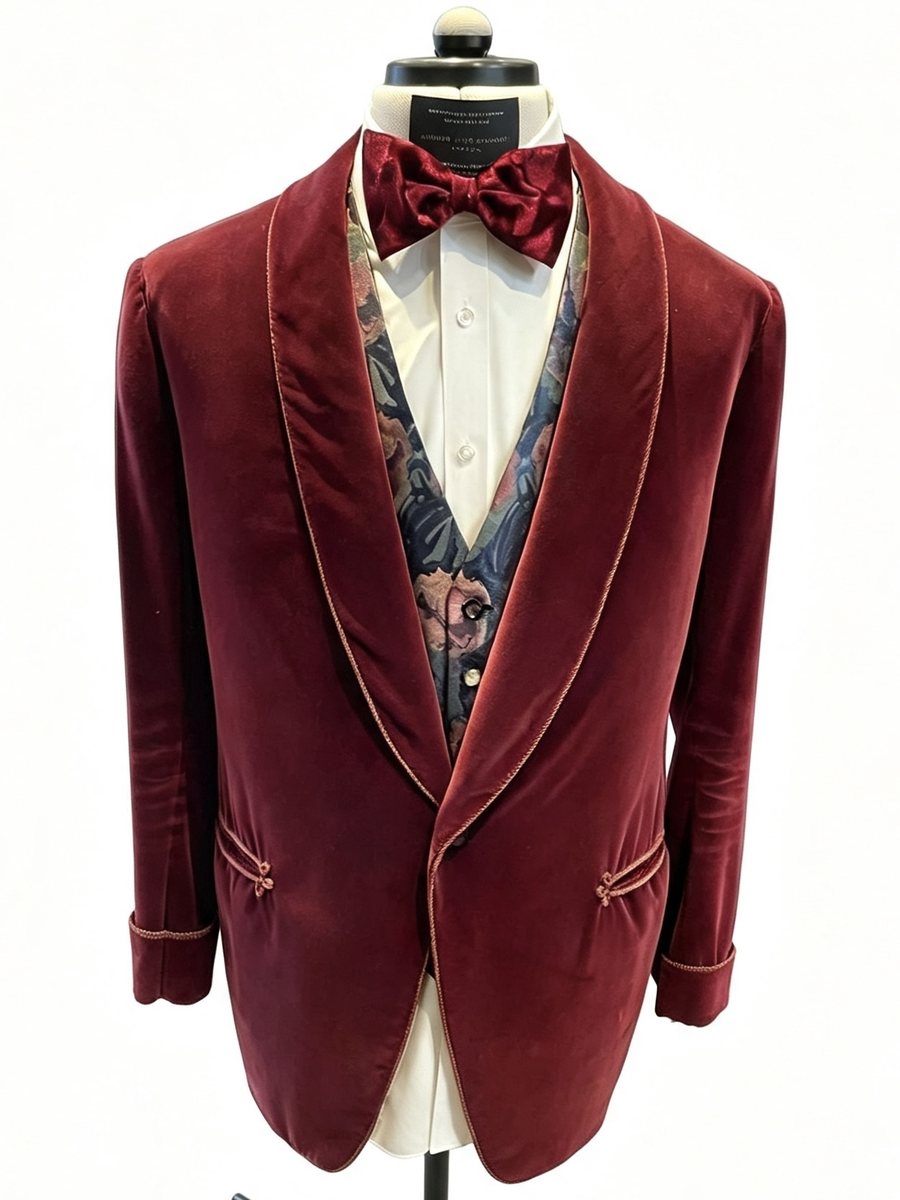
Originating as a garment of private ritual, the smoking jacket was worn after dinner to protect evening clothes and mark the transition from formality to leisure. Today, it remains one of the few garments that combines indulgence with structure. It must never resemble costume. It must appear deliberate.
History & Origins
The garment we recognise today emerged in the mid-19th century alongside the ritual of retiring to smoke after dinner. Contemporary descriptions emphasised a short robe-like jacket in velvet or similar cloth, often lined brightly and sometimes finished with decorative braid and large buttons.
In 1865, Henry Poole & Co. made a blue silk smoking jacket for the Prince of Wales (future Edward VII). His guest James Brown Potter brought the style to Tuxedo Park, New York in 1886 - and the "tuxedo" was born. By the 1950s, the smoking jacket was a legitimate evening jacket.
Key Features
| Shawl Collar | Most traditional. Smooth, rounded, often quilted. Speaks to cosy origins. |
|---|---|
| Peak Lapel | More structured and contemporary. Sharper silhouette for events. |
| Silk Satin Facings | Hand-finished; creates subtle contrast against velvet body |
| Grosgrain Facings | Ribbed silk alternative; more textured, subtly refined |
| Braided Frogging | Ornamental silk cord fastenings inspired by military dress |
| Bespoke Embroidery | Crest, initials, or family insignia - a truly personal touch |
When to Wear
Private dinners & hosting, formal house gatherings, after-dinner wear, luxury leisure, creative black tie events.
Our Offering
Never Miss a Commission Deadline
Receive our Seasonal Commission Calendar - a quarterly email with cloth recommendations, commission timelines, and event dress code reminders timed to the British sporting and social calendar.